

Projecting Signs – Double-Sided Illuminated and Non-Illuminated Signs
Projecting signs are usually mounted perpendicular to a building's facade so that a company name, logo or other content is visible from both directions along the street. They are also called double-sided signs or side-mounted signs. They suit premises whose entrance or front sign is not sufficiently visible to visitors approaching from the side.
Metaling DOO Belgrade designs, manufactures and installs projecting signs to suit the design, dimensions, location and facade characteristics. They can be illuminated or non-illuminated, rectangular, circular or other shapes. Construction, fixing methods and finishes are adapted to the specific building and sign purpose.

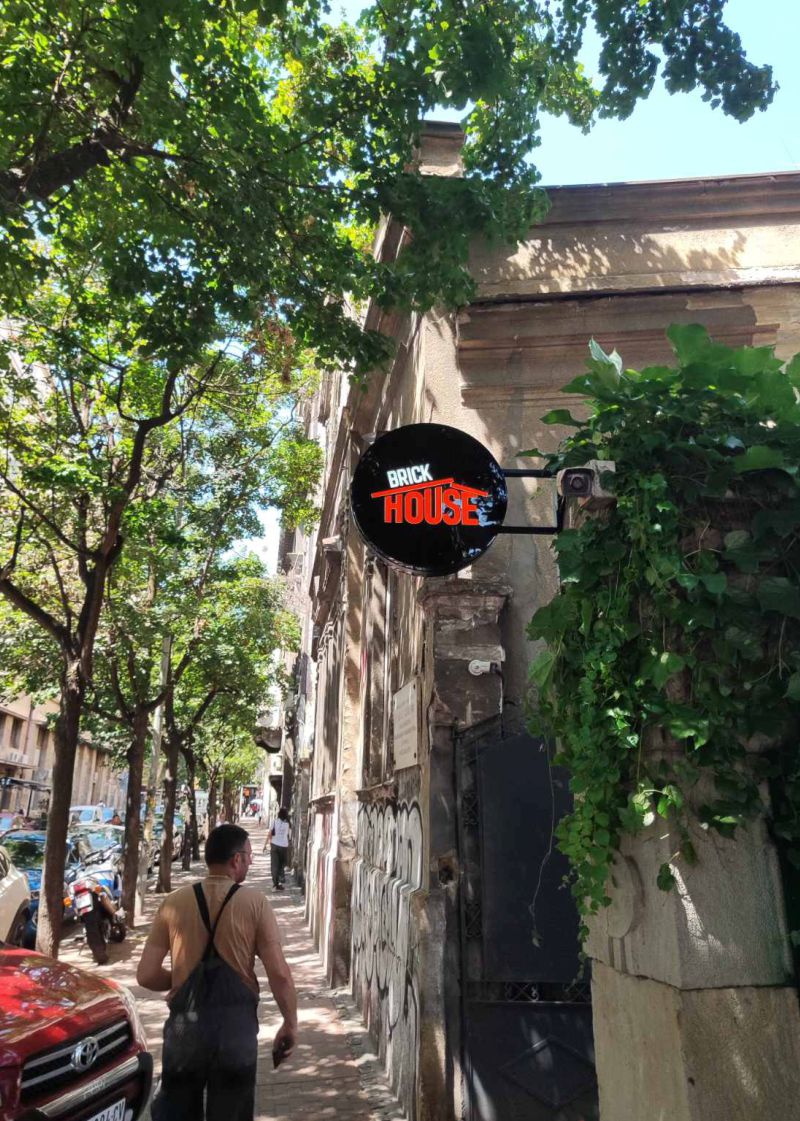
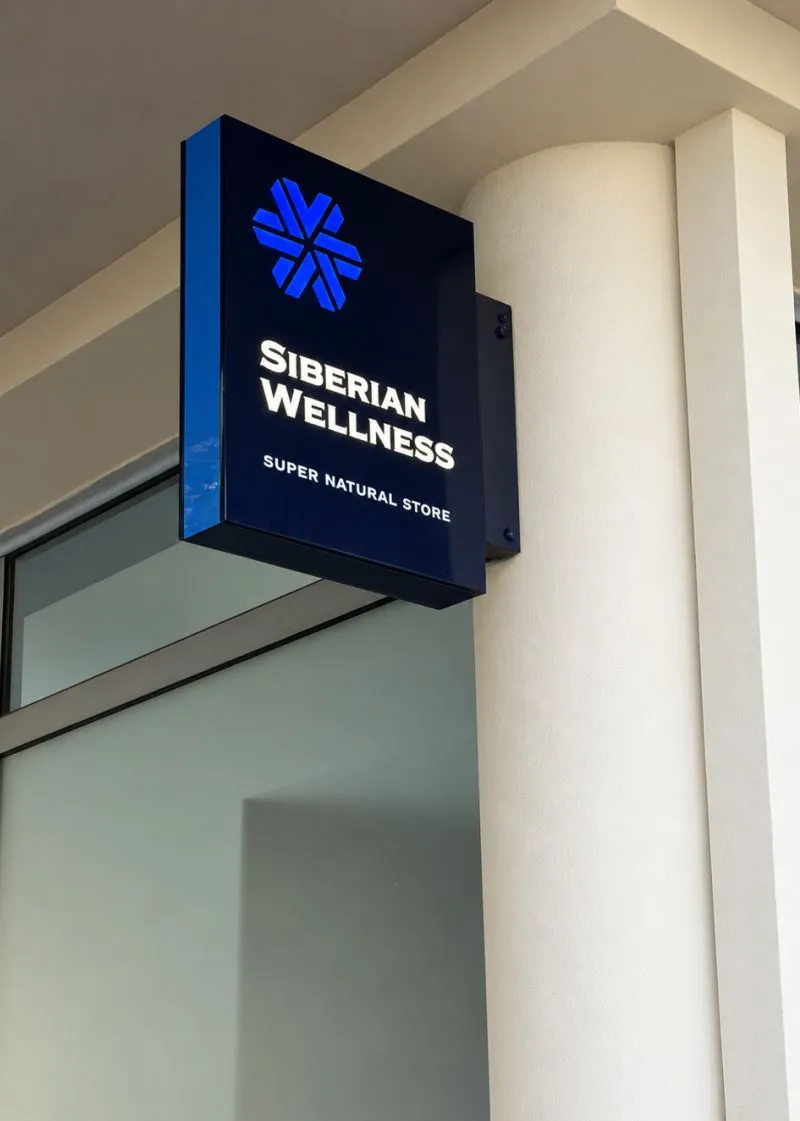


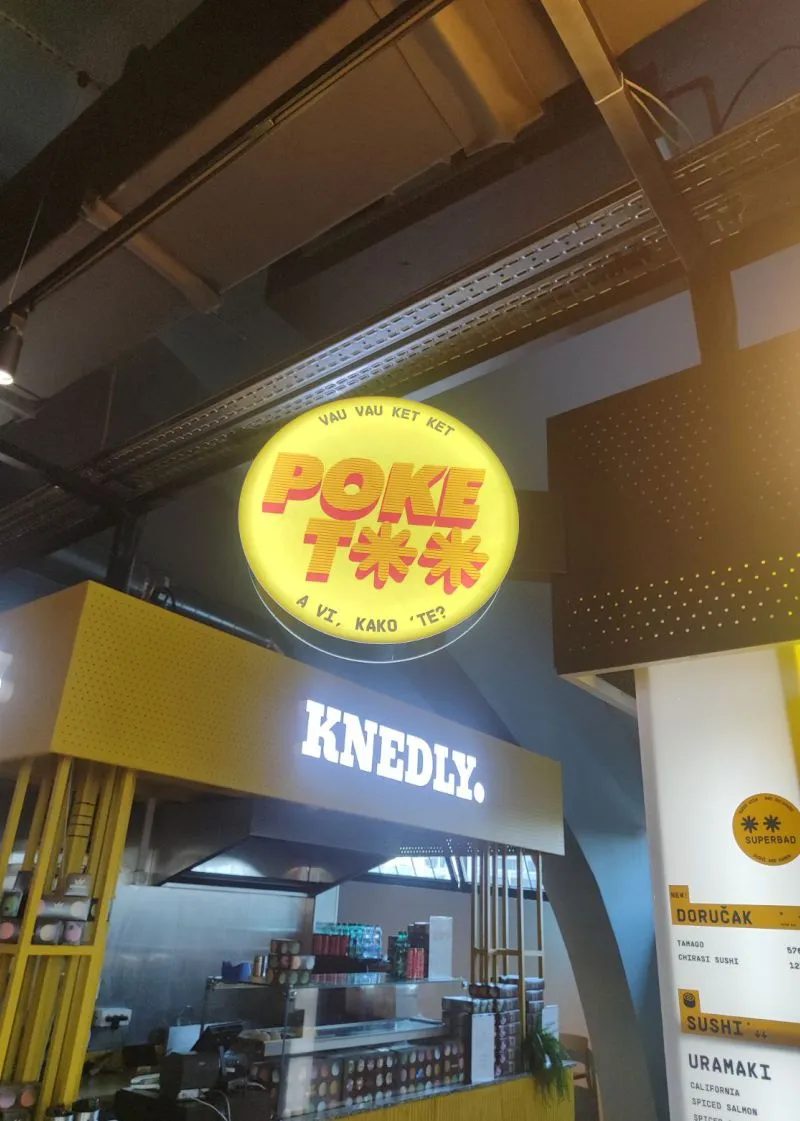
Projecting Signs: Types and Manufacturing Methods
The type depends on brand identity, building position, installation options and whether the lettering needs to be visible in the evening. Double-sided display can be achieved in various ways, from conventional lightboxes to opaque panels and cut-out metal cladding.
Double-Sided Illuminated Lightbox Signs
Both faces of an illuminated projecting sign can be lit. A typical construction combines a metal housing, translucent acrylic faces and LED lighting. Graphics can use vinyl or digital printing according to the design and required daytime and night-time appearance.
Cut-Out Alubond Projecting Signs
Aluminium composite panels (Alubond) can clad illuminated or non-illuminated projecting signs. In illuminated versions, lettering or logos can be cut out of the panel, with suitable translucent material in the openings. This allows the surface to retain its selected colour while only the intended details are illuminated.
Non-Illuminated and Decorative Projecting Signs
Projecting signs can also be made without integrated lighting, for example from aluminium, steel elements, Alubond or stainless steel with graphics on both sides. This suits locations with sufficient ambient light or where a subtler appearance is required. Decorative designs can include special metal finishes and visible or concealed brackets.
Materials for Projecting Signs
Double-sided signs use aluminium, steel, Alubond, acrylic (Plexiglas) and stainless steel. Selection considers dimensions, weight, design loads and site conditions as well as appearance.
- Aluminium: used for frames, returns and cladding where adequate rigidity and lower weight are needed.
- Steel: used for brackets, cantilevers and other structural parts according to the design.
- Alubond: provides flat cladding, the final colour and cut-out sign faces.
- Acrylic: used for illuminated surfaces and details that transmit light.
- Stainless steel: specified for particular aesthetic requirements, metal details or decorative designs.
Metal and panel colours follow the artwork; powder coating or other suitable finishes can be used for particular elements. View the available RAL chart.

Projecting Signs – LED Lighting on Both Sides
In illuminated models, LED modules are arranged to light both sign faces with appropriate layout and power supplies. Appearance depends on housing depth, translucent material, sign shape and module layout. Lighting is designed for the specific construction, rather than external dimensions alone.
Outdoor use requires consideration of electrical component protection, cable routing, moisture drainage and maintenance access. A declared IP rating for an individual LED module should not be equated with protection of the complete sign assembly.
Projecting Sign Construction and Facade Installation
Unlike a sign mounted flat against a wall, a projecting sign transfers loads to the facade through a bracket extending from the building. Fixing must therefore suit the sign's weight, projection, wind, wall type and actual load-bearing substrate. Facade cladding and insulation layers must not automatically be treated as structural elements.
Height above the pavement, permitted projection and other conditions depend on the location, applicable rules and any required approval. Values in earlier catalogue texts do not provide a universal rule for every building. Site conditions, dimensions and installation methods must be checked before manufacture.
What Is Needed for Technical Preparation?
- a facade photograph showing the desired installation position;
- approximate sign dimensions and position relative to the pedestrian route;
- information on wall construction and any insulation;
- vector artwork of the logo and lettering, with desired colours;
- details of the available electrical connection for an illuminated version;
- the building's location and any special sign installation requirements.
Benefits of Double-Sided Projecting Signs
- Visibility from two directions: faces oriented along the street help visitors notice the premises from either side.
- Different structural options: a choice of illuminated and non-illuminated models.
- Brand adaptation: shape, graphics and finishes match the building's appearance.
- Combination with facade signs: a side-mounted sign complements front-facing identification.
- Commercial applications: suitable for pedestrian streets, hospitality venues and shops.
Where Are Projecting Signs Used?
Projecting signs for cafés, restaurants, pharmacies, boutiques, banks and hotels help visitors identify an entrance or business location. On streets lined with shops, this type of sign can be more noticeable than signage mounted solely in the facade plane.
The gallery shows completed signs, including illuminated and non-illuminated double-sided models. Proportions, bracket types and graphics are selected for each building in relation to the facade and surrounding space.
Projecting and Facade Signs – Coordinated Building Identification
Facade lettering is generally viewed from the front, while projecting elements are noticed when moving parallel to the building. Combining these two types creates a consistent visual identity, with repeated logos and colours in different positions. View face-lit LED 3D letters and lightbox signs.
What Determines the Price of Projecting Signs?
The price of a double-sided projecting sign is calculated for each project. The main factors are dimensions, materials, lighting type, structural complexity and installation.
1. Sign Dimensions and Shape
Larger formats, non-standard shapes and demanding logo details can increase material consumption, working hours and bracket loads.
2. Materials and Finishes
Aluminium, Alubond, acrylic, steel and stainless steel differ in processing and price. Additional treatments, colouring, polishing or special graphics also affect the total.
3. Lighting and Electrical Equipment
An illuminated double-sided design needs LED modules, power supplies, suitable installations and service access. Non-illuminated signs do not require the same electrical components.
4. Brackets and Installation
The fixing system, substrate type, working height and access significantly affect the price. More complex buildings require additional technical preparation.
5. Additional Requirements
Special shapes, combinations with facade signs, project documentation and requirements of the competent authorities can affect the final scope.
For an accurate quotation, supply dimensions, the logo and a facade photograph with the location. Send a quotation request.
Frequently Asked Questions About Projecting Signs
Does a Projecting Sign Have to Be Illuminated?
No. Projecting signs can have LED lighting on both sides or be non-illuminated with double-sided graphics and finishes to the project specification.
Can Projecting Signs Be Installed on an Insulated Facade?
This depends on the building structure and the ability to fix into a load-bearing substrate. Brackets and anchoring must suit the particular wall.
What Is the Difference Between a Projecting Sign and a Conventional Lightbox?
Lightbox describes an illuminated housing type, while projecting sign describes the mounting method, usually perpendicular to the facade. A sign can be both a double-sided lightbox and a projecting sign.
Does a Projecting Sign Require Approval?
Obligations depend on the location, building type and applicable rules. Local conditions are checked before installation, with documentation prepared where required. Learn more about permit documentation.
