

Alubond Signs – Illuminated Signs with Cut-Out Lettering
Alubond signs are illuminated signs made from aluminium composite panels or aluminium sheet, with cut-out lettering, logos and graphic elements illuminated by LEDs. This technology creates sign faces with clearly defined shapes and a contrast between the opaque panel surface and the illuminated lettering.
Metaling DOO, Belgrade designs, manufactures and installs illuminated Alubond signs to suit the artwork, dimensions and technical requirements of the building. Production combines precise machining of aluminium and composite materials, translucent acrylic, LED lighting and a suitable sign housing.
Cut-out signs are particularly suitable for identifying commercial buildings, retail premises, restaurants, hotels, petrol stations and other locations that require a contemporary appearance and good visibility by day and night.
Depending on the construction and project requirements, Alubond signs can be mounted directly on a wall or facade, integrated into fascia signage and entrance portals, or used as interior signs.


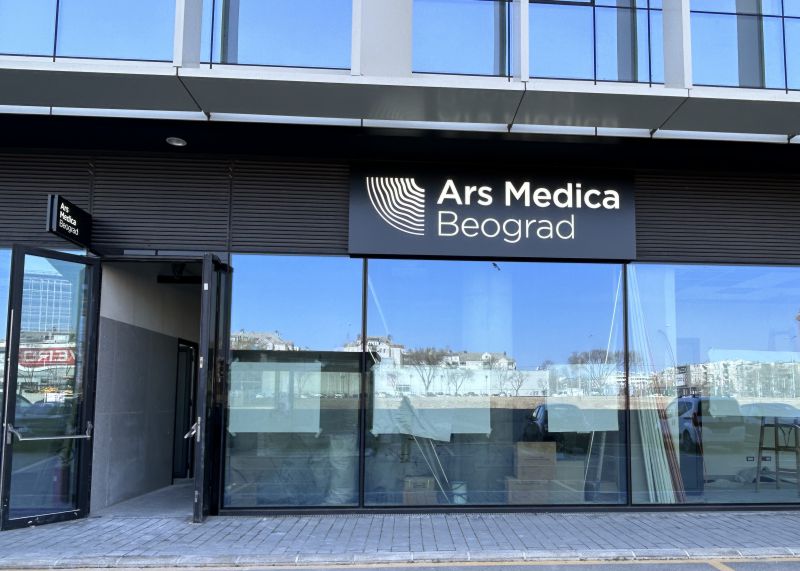


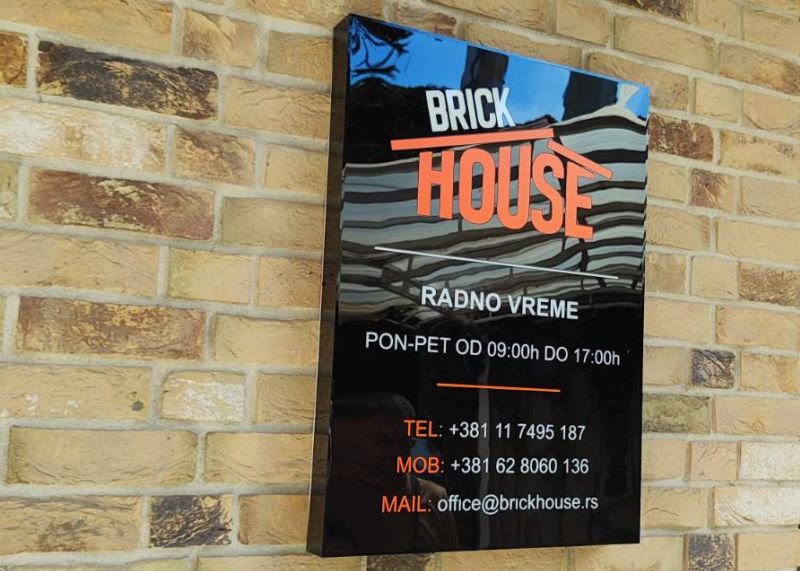


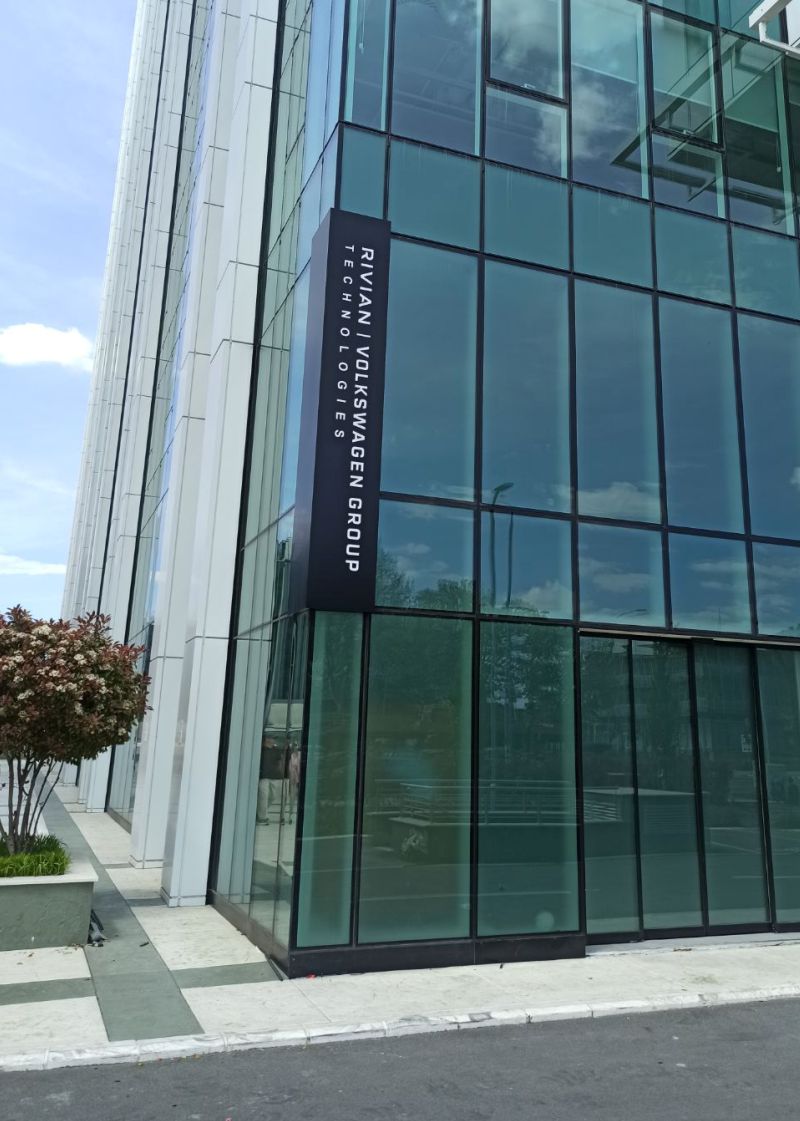
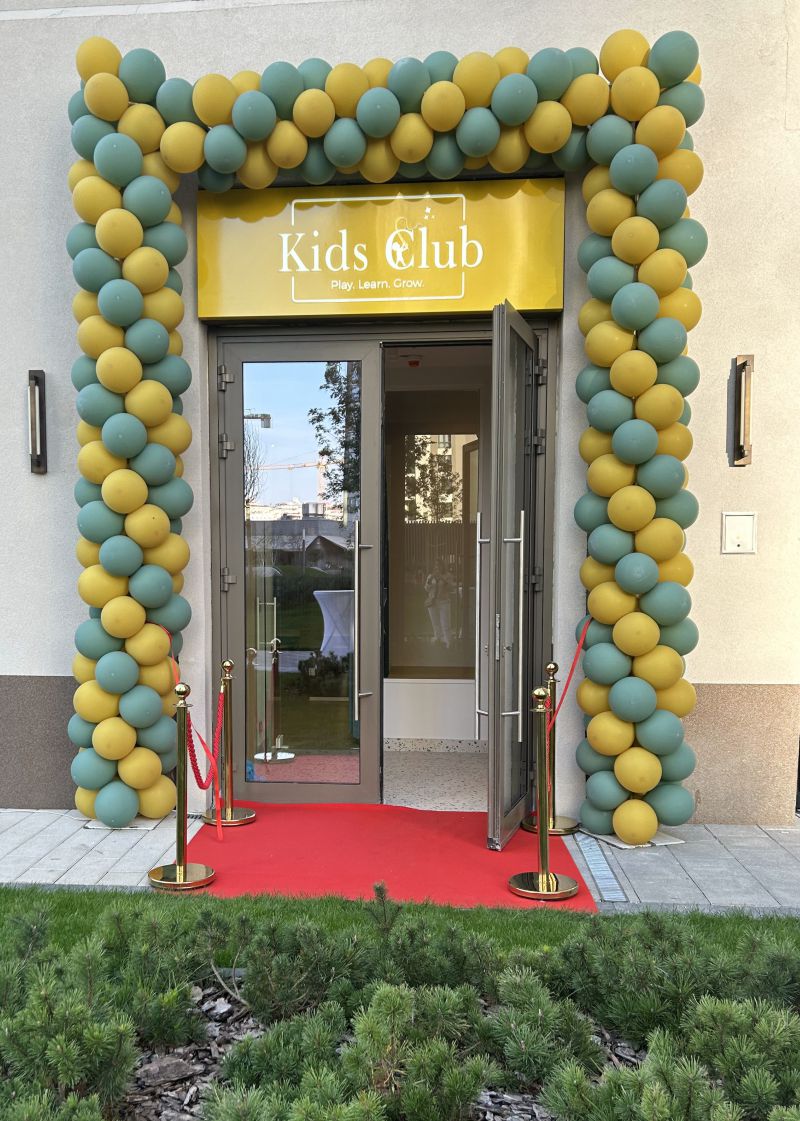
Alubond Signs – Cut-Out Aluminium Light Box Signs
Cut-out aluminium and Alubond signs are a particular type of illuminated sign box, or light box, in which only selected parts of the sign face are illuminated. Unlike conventional light box signs, where most of the front face is usually illuminated, LED light passes through the cut-out lettering, logos and graphic elements fitted with translucent acrylic.
The front face is made from aluminium sheet or aluminium composite panel (Alubond), with LED modules installed inside the sign housing. This construction combines an opaque metal surface with precisely illuminated details, while allowing the shape, colour and dimensions to be adapted to the client's artwork.
The basic principle behind cut-out Alubond signs is to form lettering or a logo in the front surface of the sign panel. Precise openings matching the graphic elements are cut into the aluminium or composite sheet using a prepared vector drawing.
Suitable translucent acrylic elements are fitted behind or within the cut-outs, allowing light from the LED modules inside the housing to pass through.
The resulting sign face retains the colour and finish of the main panel, while the lettering or logo stands out through illumination.
CNC Machining and Cutting the Sign Panel
Lettering, logos and graphic elements are cut out using a prepared vector drawing. The appropriate CNC machining or cutting technology is selected according to the material type and thickness.
Machining accuracy is important for the appearance of the edges, the fit of the acrylic elements and the defined shape of the lettering. Complex logos require particular attention to thin lines, small openings and details that may affect manufacturability.
Fitting the Translucent Acrylic Elements
Acrylic is used to form the illuminated parts of the lettering. White or coloured translucent materials can be used, depending on the desired visual effect.
The acrylic elements can be fitted behind the cut-out panel or shaped to match the openings in the lettering, according to the construction design.
Their dimensions, thickness, shape and fixing method are determined by the size of the openings, the required lighting effect and the conditions in which the sign will be used.
Housing and Supporting Structure
The sign housing brings together the front panel, side and rear elements, LED lighting and suitable fixing components.
The construction can be designed for direct wall mounting, installation on a supporting framework or integration into existing architectural cladding.
The depth of the housing is determined by the sign dimensions, the space available for LED modules, the required light distribution and access for servicing.
Materials for Illuminated Alubond Signs
Cut-out signs are manufactured from aluminium sheet and aluminium composite panels, together with suitable translucent elements and an LED lighting system.
The choice of materials depends on the dimensions, shape, installation location, finishing requirements and intended construction.
Aluminium Composite Panels – Alubond
An aluminium composite panel consists of outer aluminium layers and an inner core, the composition of which depends on the specific product and its intended use.
The advantages of these panels include relatively low weight, good surface flatness, machinability and a wide choice of factory finishes.
Panels can be cut, milled and formed to meet the construction requirements, while following the selected material manufacturer's technical recommendations.
Outdoor applications require an appropriate panel type, finish and fixing method. Properties such as weather resistance and reaction to fire depend on the specific product and its declared performance.
Aluminium Sheet Signs
In addition to aluminium composite panels, cut-out signs can also be made from solid aluminium sheet.
This technology provides different options for forming, joining and finishing the sign elements.
Aluminium surfaces can be suitably prepared and painted to match the required visual identity, including finishes in RAL colours.
The choice between aluminium sheet and composite panel depends on the size of the sign, its construction, the intended processing methods and other technical requirements.
Colours and Finishes
The colour of the sign panel can be adapted to the client's visual identity. Depending on the selected material, suitable factory surface finishes or subsequent painting systems are used.
Combining the panel colour with the illuminated elements allows different visual effects to be achieved by day and night.
LED Lighting for Cut-Out Alubond Signs
LED lighting for Alubond signs is installed inside the housing, behind the cut-out and translucent elements of the lettering.
The lighting layout is determined by the housing depth, the size of the illuminated areas, the shape of the lettering and the characteristics of the selected LED modules.
The aim is to achieve suitable brightness and the most uniform light distribution possible, without pronounced bright spots or dark areas.
Face Illumination of Lettering
In cut-out Alubond signs, light is directed through the translucent parts of the front face. Individual letters, symbols or parts of a logo are illuminated, while the rest of the sign panel retains its base colour.
This construction gives the sign a clearly defined daytime appearance and a distinct lighting effect in low ambient light.
Selecting LED Modules and Power Supplies
The LED module type, layout, power supply and any lighting controls are selected according to the technical requirements of the project.
Different light colours and lighting characteristics can be considered to suit the lettering.
For outdoor signs, particular attention is paid to protecting electrical components, connections and wiring against environmental exposure.
Advantages of Illuminated Alubond Signs
Alubond signs with cut-out lettering combine a flat sign face, a choice of finishes and selectively illuminated graphic elements.
- Adaptation to the design: lettering, logos and graphic elements are manufactured to match the client's vector artwork.
- Indoor and outdoor applications: with a suitable choice of materials, construction and electrical protection.
- A range of finishes: panel colours and surface finishes can be selected to suit the project.
- A controlled lighting effect: selected parts of the sign face are illuminated.
- Architectural integration: signs can be installed on facades, fascias and other sign cladding.
- Adaptable construction: the depth, materials and mounting method are determined by the building's requirements.
In some configurations, this technology can offer an economical alternative to other types of illuminated signs. The final cost-effectiveness depends on the dimensions, complexity of the lettering, construction and scope of work.
Where Are Alubond Signs Used?
Cut-out Alubond signs are used to identify commercial buildings, retail premises, petrol stations, hospitality venues and other locations that require an illuminated sign face.
Illuminated Facade Signs
Alubond signs can be installed on the facades of commercial and retail buildings. The panel colour, dimensions and arrangement of the illuminated elements are adapted to the building's architecture and the brand's visual identity.
The fixing method is determined by the mounting surface and the dimensions and weight of the sign structure.
Fascia Signage and Petrol Station Signs
Cut-out aluminium and composite panels can be used for fascia signage, lettering and cladding that form part of the visual identity of petrol stations and other commercial premises.
In these projects, it is particularly important to coordinate the shapes, colours, construction and lighting method with the building design.
Interior Signs and Wayfinding
Alubond signs can also be used indoors where an illuminated sign face with clearly defined lettering or a logo is required.
Applications include retail premises, commercial buildings, reception areas and other locations where the sign element forms part of the architectural design.
Combining Alubond Signs with 3D Letters and Signage Portals
Depending on the project, cut-out sign panels can be combined with additional three-dimensional elements or individually manufactured letters.
For more complex architectural forms, Metaling also manufactures structural 3D signage portals from aluminium composite panels.
Explore 3D Alubond signage portals.
Dimensions and Technical Limitations of Alubond Signs
The dimensions and construction of cut-out signs depend on the selected material, available sheet sizes, lettering geometry, required housing depth and installation conditions.
For large sign faces, particular consideration is given to the arrangement and joining of panels, the supporting framework and transport and installation requirements.
Limitations When Cutting Out Lettering
The ability to manufacture the sign accurately is affected by letter stroke widths, the size of internal openings, the spacing between graphic elements and the complexity of the logo.
Fine details or very narrow lines may require adjustments to the artwork to provide sufficient space for manufacturing, fixing the acrylic elements and installing the lighting.
Housing Depth and Space for LED Lighting
The housing depth must allow the LED modules, electrical wiring and translucent elements to be positioned correctly.
The required depth depends on the sign construction, lettering geometry and lighting characteristics. Particularly thin sign elements may require a different technical solution.
Learn more about slim illuminated panels and edge-lit signs.
Installation and Maintenance of Illuminated Alubond Signs
The installation method is determined by the material and construction of the sign housing, the characteristics of the mounting surface and the installation location.
Signs can be fixed directly to suitably prepared surfaces or to dedicated supporting elements, according to the technical design.
Preparing for Installation
Before installation, the following should be checked:
- the dimensions and overall position of the sign face,
- the type and condition of the mounting surface,
- the available structural fixing options,
- the location of the electrical connection,
- the available cable routing options,
- the installation height and accessibility,
- the need for an additional supporting framework or installation equipment.
For ventilated facades, external insulation systems and other specific substrates, the fixing method needs to be defined before production.
Maintaining the Sign Housing and Lighting
Maintenance includes checking the condition of the front panel, translucent elements, structural joints, LED modules, power supplies and electrical wiring.
For outdoor signs, particular attention is paid to areas where water can collect, the intended drainage points, sealed joints and fixing components.
Cleaning is carried out using suitable products and procedures for the materials installed.
Pricing for Illuminated Alubond Signs
The price of illuminated Alubond signs is calculated according to the technical requirements of each project. Dimensions, materials, artwork complexity, lighting and installation method directly affect the overall cost.
Because there are many manufacturing options, an accurate price is determined from the supplied lettering or logo, dimensions and building information.
Factors That Affect the Price
- Sign dimensions: the overall area and geometry affect material quantities, construction and production time.
- Design complexity: cutting out intricate logos, fine details and complex contours requires additional preparation and machining.
- Lighting type: the characteristics and number of LED modules, power supplies and any control systems affect the price.
- Material and finish: the choice of aluminium sheet or composite panel, colour and processing method affects production costs.
- Installation location and method: the mounting height, substrate type, additional structure and installation equipment affect the total price.
To prepare a quotation, it is helpful to provide vector lettering or a logo, the required dimensions, quantity and a photograph of the installation location.
Frequently Asked Questions About Alubond Signs
What Are Alubond Signs?
Alubond signs are sign elements made from aluminium composite panels. In illuminated cut-out signs, the lettering or logo is formed by cutting openings in the panel, with translucent elements and LED lighting fitted behind them.
How Do Cut-Out Alubond Signs Differ from Conventional Light Box Signs?
Cut-out Alubond signs belong to the illuminated sign box, or light box, family, but differ in the construction of the front face and the way light passes through it. In conventional light box signs, most of the acrylic or translucent fabric face is usually illuminated.
In cut-out aluminium and Alubond signs, the front face is made from an opaque metal or composite panel. Light passes only through the cut-out lettering, logos and graphic elements, with translucent acrylic elements and LED lighting fitted behind them.
Both technologies use internal lighting, but offer different design options and visual effects. Explore the conventional light box signs manufactured by Metaling.
Can Alubond Signs Be Installed on Facades?
Yes. Facade applications require suitable materials, finishes, supporting structures and electrical components designed for outdoor conditions.
Can Only the Letters Be Illuminated, Rather Than the Entire Face?
Yes. This is the basic principle of illuminated cut-out signs. LED light passes through selected translucent parts of the lettering, while the remaining surface retains the appearance of the main panel.
What Determines the Depth of an Alubond Sign?
The depth depends on the size and shape of the lettering, the LED module type, the required light distribution and the construction of the sign housing. The final dimension is defined by the technical design.
Are Alubond Signs Made to Measure?
Yes. The shape, dimensions, colour, arrangement of illuminated elements and installation method are defined according to the artwork and the building's requirements.
What Is Needed to Prepare a Quotation?
To prepare a quotation, please provide vector lettering or a logo, approximate sign dimensions, the location, a photograph of the building and information about the installation position. These details allow a suitable construction and lighting technology to be proposed.
References and Completed Projects
The gallery on this page shows signs manufactured from aluminium and composite materials, with different lettering, colours and lighting methods.
Examples of completed projects illustrate the use of cut-out signs on commercial buildings, retail premises and other locations.
