


Interior Signs – Custom Signage for Commercial Premises and Hotels
Interior signs identify rooms, guide visitors and communicate a visual identity inside a building. In hotels, offices, shopping centres, healthcare facilities and commercial buildings, they bring together clear information, materials and interior architecture. A well-designed sign should be easy to notice, legible and positioned where the user needs it.
Metaling DOO Belgrade designs and manufactures custom interior signage: room numbers, office, toilet, floor, corridor and reception signs, directional signs, information boards and decorative brand signage. The solution is adapted to the purpose of the space, the client's graphic standards, installation method and maintenance requirements.


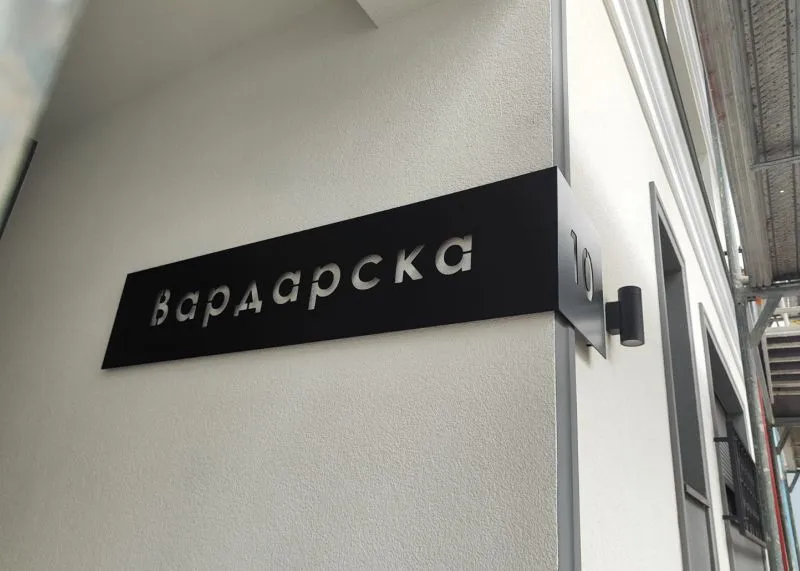
Interior Signs: Types and Applications in Commercial Premises
Different functions require different sign formats and ways of reading them. Rather than making every sign the same size and format, it is more useful to develop a coordinated system that distinguishes identification, directional and information signs.
Door Signs, Office Signs and Room Numbers
Door signs make it easy to identify rooms, departments and occupants. Hotels use them for room numbering and shared facilities; commercial buildings use them for office names, meeting rooms and administrative areas. Text can be engraved, printed or made as a raised element.
Signs for Toilets and Shared Facilities
Pictograms, symbols and lettering identify toilets, changing rooms, lifts, staircases and other facilities. Symbols need to be understandable, and the same signage system should be used consistently throughout the building.
Directional Signs and Wayfinding
Directional signs guide visitors to their destinations along corridors, at junctions and near lifts. Wayfinding also includes planning information hierarchies, sign positions and routes, rather than simply manufacturing physical signs.
Reception and Commercial Interior Branding
Alongside functional signage, we manufacture logos, company names, raised letters and decorative elements for receptions and prestigious areas. Their role is primarily identification and visual appeal, so materials and lighting are selected to suit the architectural concept.
Materials for Interior Signs
Material selection affects appearance, weight, resistance to touch and cleaning, engraving options and price. Aluminium, stainless steel, acrylic, PVC, brass and bronze are commonly used, individually or in combination.
Aluminium and Stainless Steel
Aluminium signs offer relatively low weight and a variety of finishes, including coating in a selected RAL colour where appropriate for the project. Stainless steel signs are used where a distinctive brushed or polished metal surface is required. The appropriate grade and finish depend on the conditions of use.
Brass, Bronze and Decorative Metals
Brass and bronze are used for prestigious interiors, hotel signage, plaques and details in classic or contemporary styles. Various surface finishes and combinations with other materials are possible. The metal's appearance during use depends on its protective finish, contact and maintenance.
Acrylic, PVC and Combined Materials
Acrylic glass (Plexiglas) allows coloured signs with transparent or translucent sections. PVC is used for certain simpler boards and plaques. Combining materials creates layered signs, stand-off lettering and other solutions tailored to the space.
Techniques for Lettering, Numbers and Symbols
Sign graphics can be produced through engraving, laser or mechanical processing, chemical etching of suitable metals, UV printing, vinyl application or separate raised elements. The technology is selected according to the material, detail size, quantity and desired finish.
For example, a room number sign can have a metal base with an engraved number, while an information board can use printed graphics or interchangeable elements. Larger signage systems need consistent fonts, symbols, colours and information layouts defined in advance.
Illuminated and Non-Illuminated Interior Signs
Non-illuminated interior signs use the building's ambient lighting and suit most office and hotel applications. Illuminated signs can incorporate LED lighting, illuminated symbols or a backlighting effect, depending on their construction.
Illuminated designs require provision for power, cable positions, any service access and light diffusion. Lighting should not be treated as a substitute for adequate contrast and legibility of the essential information.
Legibility, Accessibility and Braille Signs
Planning should consider reading distance, letter size, contrast between text and background, material glare and installation height. Particular attention is needed in spaces used by people with different accessibility needs.
Where specified by the project, tactile and Braille signs can be manufactured. Their dimensions, position, content and installation must meet the requirements of the specific building, applicable regulations and design. Decorative raised elements alone do not automatically make a sign accessible.
Interior Sign Dimensions and Installation
Dimensions are determined by the information type, visibility, material, installation surface and number of elements required. Room numbers, large directional boards and reception logos cannot share a single recommended size range. Element spacing, material thickness and fixing methods are checked for each sign type.
Smaller signs can be installed using suitable adhesives or tapes, depending on the substrate type and condition. More demanding, larger or multilayer signs use stand-off fixings and mechanical components. Installation on glass, clad or specially finished surfaces should be agreed before production.
What Determines the Price of Interior Signs?
Manufacturing costs depend on each sign's specification, quantity and installation method. The existing range includes simple PVC or acrylic signs, standard aluminium and acrylic signage, and more demanding stainless steel, brass or other decorative material options.
- Material: PVC and acrylic, aluminium, stainless steel, brass and bronze differ in purchase cost, processing options and protective finishes.
- Dimensions and quantity: size and batch production affect material consumption, preparation and manufacturing.
- Technology and finishing: engraving, etching, UV printing, vinyl, brushing, polishing, sandblasting and protective treatments can substantially affect the price.
- Installation method: direct bonding, stand-off fixings, mechanical fixing and layered construction require different amounts of work.
- Additional requirements: LED lighting, tactile elements, Braille, interchangeable information and special packaging or batch identification affect the calculation.
For an accurate quotation, supply a list of signs with quantities, dimensions, text, selected materials, artwork and installation locations. Send a quotation request for interior signs.
Completed Interior Sign Projects
The gallery on this page shows hotel room numbers, toilet signs, office plaques, apartment signs and directional signage. The examples illustrate metal and acrylic choices, surface treatments and different ways of displaying lettering and symbols.
Frequently Asked Questions About Interior Signs
Which Signs Are Needed for a Hotel or Office Building?
This depends on the building's organisation. Common groups include room numbers, room names, toilet and shared facility signs, floor directories, directional signs and information signs. A coordinated signage plan is recommended for larger buildings.
Can Interior Signs Be Made in Small Batches?
Yes, the order size is defined by the project. For larger batches, preparing a complete lettering and numbering list in advance helps ensure consistency.
Do the Signs Need LED Lighting?
No. Most signs can be non-illuminated. LED lighting is used where justified by the design, conditions in the space or the purpose of the particular sign.
Do You Make Braille Signs?
Tactile and Braille signs can form part of an interior signage project. Technical details are determined by the project documentation and accessibility requirements.

