


Flat-Cut Letters and Signs in Stainless Steel, Brass, Bronze and Aluminium
Flat-cut signs are lettering, letters, logos and identification signs made from flat metal plates or sheets. Unlike conventional built-up 3D letters with separately formed returns, flat-cut letters are made by cutting the material to the required outline, with the material thickness itself forming the sides of each element.
Metaling DOO Belgrade manufactures flat-cut signs and metal lettering in stainless steel, brass, bronze and aluminium. Each sign is made to suit the artwork, dimensions and requirements of the building, with a choice of materials, surface finishes and installation methods.
This technology enables elegant, minimalist signage for commercial premises, offices, hotels, restaurants, retail outlets and public institutions. Flat-cut lettering can be mounted directly onto the substrate or on stand-off fixings to achieve different visual effects.
The choice of material and surface finish determines the appearance of the sign, its suitability for indoor or outdoor use, maintenance requirements and overall production cost.



What Are Flat-Cut Signs and How Do They Differ from 3D Letters?
Flat-cut signs are made from flat sheets or plates of a suitable thickness. Lettering, logos and graphic shapes are formed by precisely cutting the material along the outline, without having to manufacture a separate body for each letter.
Unlike conventional 3D sign letters, whose depth is created by joining the face, returns and back, flat-cut letters have a simpler, more compact construction.
Although they do not have separately formed returns, their actual thickness, surface finish and fixing method influence the three-dimensional appearance of the lettering.
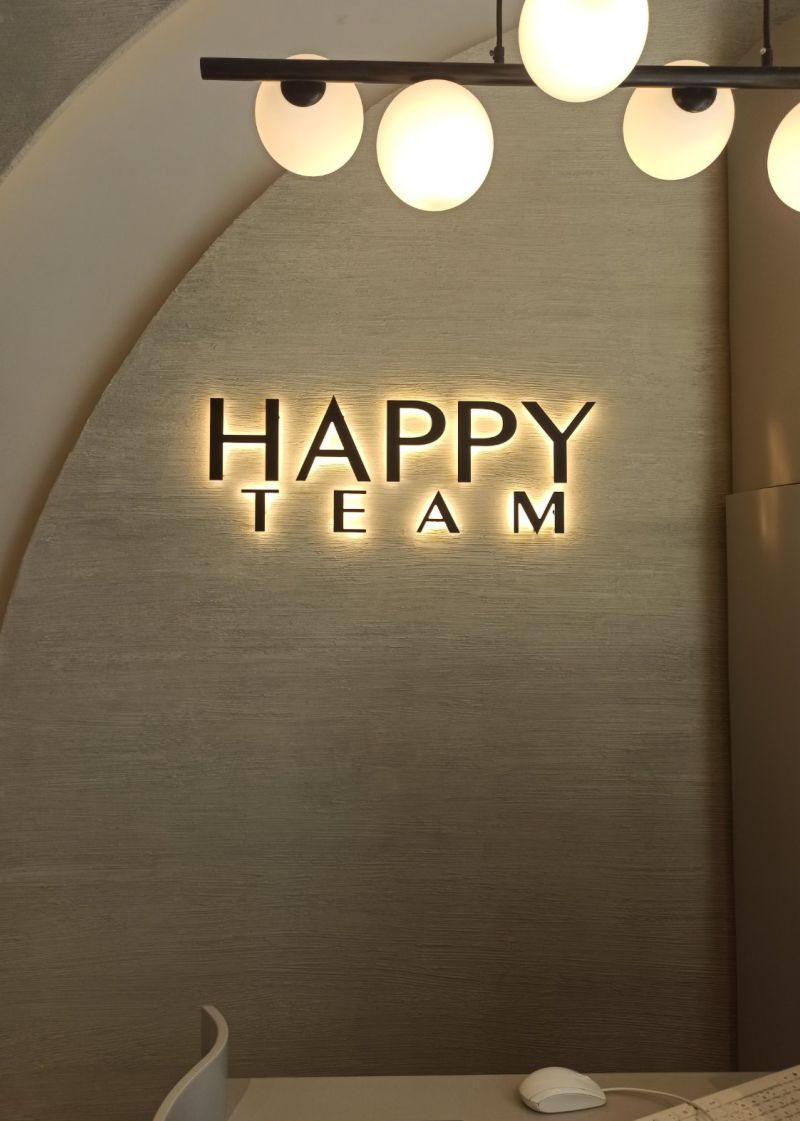
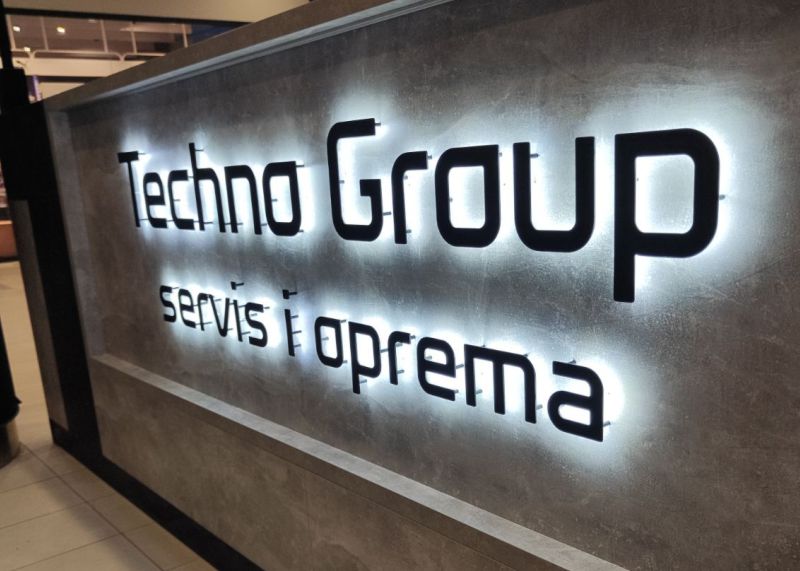
When mounted on stand-off fixings, the letters are raised away from the wall, further emphasising their outlines and shadows. Direct mounting creates a flatter, more understated appearance.
The choice between flat-cut lettering and built-up 3D letters depends on the dimensions, design, required depth, lighting method and desired visual effect.
Materials for Flat-Cut Signs
Metaling manufactures flat-cut lettering from various metals, including stainless steel, brass, bronze and aluminium. Each material has a distinctive appearance, processing options and requirements for protection and maintenance.
Flat-Cut Stainless Steel Signs
Flat-cut stainless steel letters are used when a contemporary, elegant or technically precise appearance is required. Stainless steel allows signs to be made with a range of surface finishes.
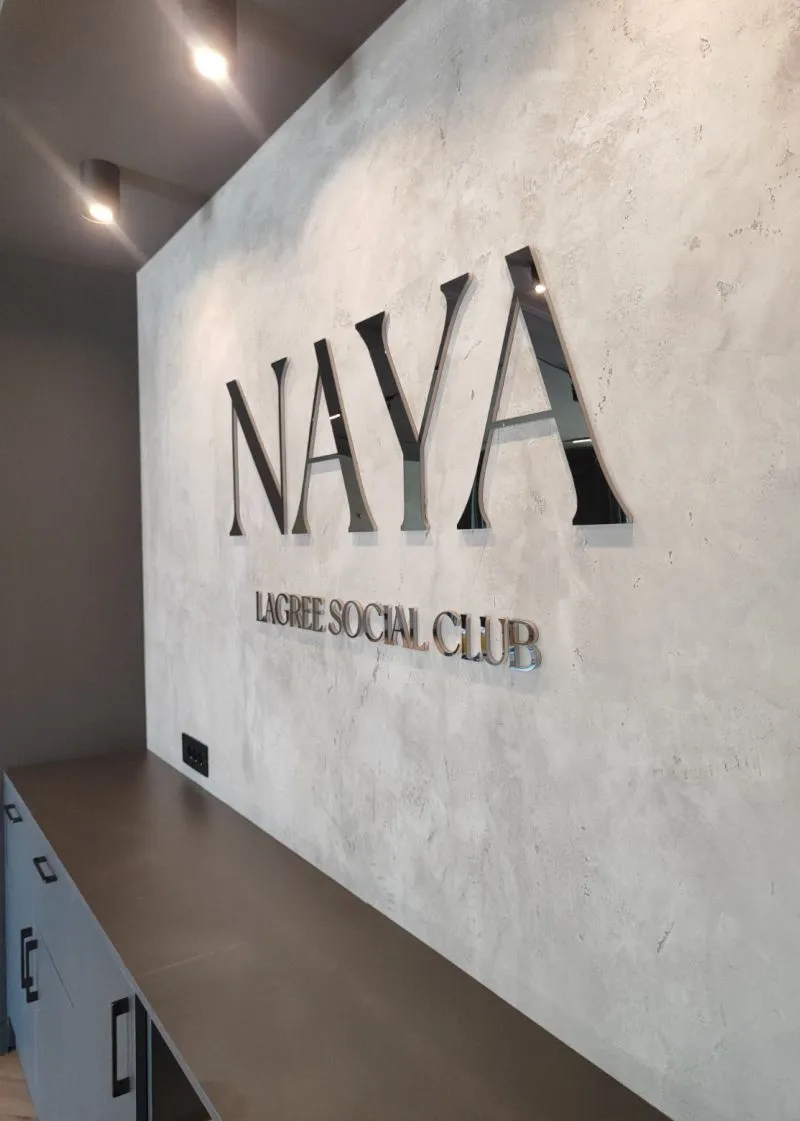
Depending on the desired visual effect, brushed or polished surfaces can be used. Brushed stainless steel has a distinctive directional texture, while polished stainless steel can provide a highly reflective finish.
Stainless steel signs are used in commercial premises, hotels, restaurants, public buildings and other locations where a neat, prestigious appearance matters.
For outdoor use, the stainless steel grade and finish must be selected to suit the environmental conditions. Corrosion resistance depends on the material quality, environment and maintenance.
Flat-Cut Brass Lettering
Flat-cut brass signs have the metal's distinctive golden-yellow tone, often chosen for elegant, prestigious lettering.
Brass is suitable for letters, logos, room identification signs, hotel signage and decorative elements. Depending on the design, the surface can be brushed, polished or treated to achieve a particular finish.
Natural brass surfaces can change in appearance over time due to oxidation and environmental exposure. Where a particular appearance needs to be retained, suitable protection and maintenance must be planned.
Brass signs are particularly suited to hotel, restaurant and commercial interiors, and buildings where the metal lettering complements architectural details.
Flat-Cut Bronze Signs
Flat-cut bronze signs are used for lettering and decorative elements with a pronounced metallic character. Bronze provides a different tone and surface effect from brass and stainless steel.
Depending on the specific alloy and finish, bronze surfaces can have different shades and textures. Finishes can emphasise the natural appearance of the metal or create a particular decorative effect.
Bronze signs can be used in prestigious commercial premises, hotels, cultural institutions and other buildings where the lettering needs to complement the architectural design.
The material and protective treatment must be selected to suit the conditions of use, particularly when the sign is installed outdoors.
Flat-Cut Aluminium Signs
Flat-cut aluminium signs are a practical solution for metal lettering and logos in a variety of shapes. Aluminium is relatively lightweight and supports a range of shaping and finishing processes.
Aluminium letters can be supplied with a natural metallic finish or protected and coloured to suit the project requirements.
One option is powder coating in shades from the RAL colour chart, allowing the lettering to match the company's visual identity or the colours of the interior and facade.
This type of lettering is used to identify commercial and retail premises, offices, restaurants and other buildings.
Metal Lettering Finishes and Colours
The surface finish plays an important role in the appearance of a flat-cut sign, because the exposed metal surface is an integral part of the design.
Various surface finishing processes can be used, depending on the metal and project requirements.
- Brushing: creating a surface with a distinctive directional texture.
- Polishing: achieving a smooth surface and a higher metallic shine.
- Powder coating: applying a powder-based colour coating, particularly to aluminium elements, in accordance with the selected finishing system.
- RAL colours: matching coloured metal surfaces to the client's visual identity.
- Decorative finishes: selecting the appropriate metal texture and appearance to suit the design.
Not every finish is equally suitable for every metal. The choice of process depends on the material, intended use, environmental conditions and expected appearance of the lettering.
Installing Flat-Cut Signs: Direct Mounting or Stand-Off Fixings
Flat-cut lettering can be mounted directly onto a prepared wall, facade, panel or other suitable substrate. Another option is to use stand-off fixings, which separate the elements from the surface and create a more pronounced sense of depth.
Direct Mounting of Metal Letters
With direct mounting, the lettering sits close to the substrate, without a deliberately large gap. This fixing method produces a simple, minimalist visual effect.
The fixing method is determined by the material, letter dimensions, weight of the elements and characteristics of the substrate.
Direct mounting is often considered for interior lettering, office identification signs, commercial premises and other signage where an understated appearance is preferred.
Mounting Flat-Cut Signs on Stand-Off Fixings
Stand-off fixings raise the metal letters away from the wall. This visually separates the lettering from the substrate and, depending on the existing lighting, can create more pronounced shadows behind the elements.
The distance from the substrate, type of stand-off fixings and fixing method are determined by the dimensions, letter shapes and project requirements.
This approach is particularly useful for emphasising a logo's outline or achieving a stronger sense of depth without manufacturing conventional hollow built-up 3D letters.
Preparing the Substrate and Installation Conditions
Before installation, the surface characteristics, fixing options and access conditions at the installation location must be checked.
Particular attention must be given to specific substrates, such as ventilated facades, external wall insulation systems, glass cladding and other surfaces that require an appropriate technical solution.
For outdoor signs, weather exposure, the choice of fixings and material compatibility are also considered.
Indoor and Outdoor Applications for Flat-Cut Signs
Flat-cut signs are used for various types of identification, from individual lettering and logos to information signs and decorative elements.
Common applications include:
- Commercial premises: company names, logos and office identification signs.
- Hotels: area names, room numbers, floor identification and signage for other functional areas.
- Restaurants and hospitality venues: metal lettering, logos and decorative signs.
- Retail and exhibition spaces: brand, sales area and product identification.
- Public institutions: lettering and information signs suited to the building's requirements.
- Decorative interior elements: metal letters and graphic shapes that complement the architectural design.
The choice of material, finish and installation method allows the sign to be tailored to the character of the space and the brand's visual identity.
Flat-Cut Signs With and Without Lighting
Flat-cut lettering is most often used as non-illuminated metal signage, with its appearance determined by its shape, material, finish and mounting method.
Where required by the project, metal lettering can be combined with suitable additional lighting or other illuminated elements. The feasibility of this combination depends on the construction, fixing method and conditions for electrical installation.
It is important to distinguish flat-cut signs from conventional face-lit 3D letters, where LED lighting is installed inside a purpose-built three-dimensional body.
View non-illuminated metal 3D letters.
What Determines the Price of Flat-Cut Signs?
The price of flat-cut signs is calculated individually, based on the dimensions, materials, finish, complexity of the lettering and installation conditions.
Although flat construction can be simpler than producing built-up 3D letters, the total price depends on the selected metal and project requirements. A single standard price therefore cannot be determined solely by the type of lettering.
Manufacturing Material
The type of metal is an important part of the cost calculation. Aluminium, stainless steel, brass and bronze differ in purchase price, properties and processing methods. The final cost also depends on the specific alloy, thickness and material availability.
Dimensions and Material Thickness
Larger lettering and thicker materials require a corresponding quantity of metal and suitable processing technology. The overall dimensions, number of individual elements and lettering shape affect the price.
For small letters and intricate details, manufacturing precision and the fixing method also need to be considered.
Surface Finish
Brushing, polishing, powder coating and other finishes affect production time and cost. Requirements for a particularly consistent texture or a specific decorative appearance can increase manufacturing complexity.
Installation Method
Direct mounting and stand-off mounting require different components and procedures. The total price depends on the substrate type, lettering dimensions, installation height and accessibility of the location.
Design Complexity and Additional Services
Simple letters and geometric shapes generally require fewer operations than complex logos, lettering with fine details or combinations of several materials.
Depending on the agreed scope of work, the cost calculation also includes the necessary technical preparation, transport, installation and other required services. Warranty terms are defined in the relevant quotation and documentation.
Frequently Asked Questions About Flat-Cut Signs
What Are Flat-Cut Signs?
Flat-cut signs are lettering, logos or identification signs made from flat sheets or plates of metal or other suitable materials. The shape is created by cutting the material along the outline, without the separately manufactured hollow returns found in conventional built-up 3D letters.
What Is the Difference Between Flat-Cut Letters and Conventional 3D Letters?
The sides of flat-cut letters are defined by the thickness of the material from which they are made. Conventional 3D letters have separately formed returns and a three-dimensional body. Both types can create different visual effects, depending on the finish and installation method.
Can Flat-Cut Signs Be Used Outdoors?
Yes, with the appropriate choice of material, finish and fixings. Outdoor applications require consideration of weather exposure and the characteristics of the location.
Are Flat-Cut Letters Suitable for Stand-Off Mounting?
Yes. Stand-off mounting separates the lettering from the substrate and creates a more pronounced sense of depth. The fixing method is determined by the letter construction and substrate type.
Which Material Should I Choose for Flat-Cut Lettering?
The choice depends on the desired appearance, intended use, environmental conditions and budget. Stainless steel offers a range of metallic finishes; brass and bronze provide distinctive decorative effects; and aluminium allows various shapes and finishes, including RAL colour coating.
What Information Is Needed for a Quotation?
To prepare a quotation, it is helpful to supply vector artwork of the lettering or logo, dimensions, preferred material, finish, quantity and a photograph of the installation location. If the material or installation method has not been specified, Metaling can propose a suitable solution.
Learn More and Request a Quotation
- Custom brass and stainless steel signs
- Non-illuminated metal 3D letters
- Signboards in metal and other materials
- Available RAL colours
- Available 3M vinyl colours
- Benefits of advertising
- How to determine sign height and size
- Guide to choosing a sign
- Help with sign design
- Request a quotation for a flat-cut sign

